Translate

Visualizzazione post con etichetta japan pop. Mostra tutti i post

giovedì 4 ottobre 2012

IDOLS (アイドル) AIDORU as Contemporary arts

From Bijinga to AIDORU, TARENTO - Idol sengoku jidai - till contemporary ARTS.


In Japanese culture, idols (アイドル aidoru) are usually female,  media personalities in their teens and early twenties who are considered particularly ATTRACTIVE, KAWAII, CUTE and who will regularly appear in the mass media,  as singers for POP (or jpop) groups, bit-part actors, TV series or Talk show personalities (TARENTO), models in photo spreads published in magazines, advertisements, etc.

Actually, thanks to the AKB48 project, IDOLS scene becomes a contemporary art for, that influence great artists such as Murakami Takashi, MR (kaikaikiki) just for telling someone name.

I would like to develop and analyse how is happen that one ultra massive pop style become CONTEMPORARY ART, now.

For first, let's see and know more about IDOLS (here thanks to wikipedia) :

The idol PHENOMENO began during the early '70, reflecting a boom in Japan for the musician Sylvie Vartan in the French film Cherchez l'idole in 1963, with Japanese title (アイドルを探せ Aidoru wo sagase) in November 1964. The term came to be applied to any cute female actress or singer, or any cute male singer.

Teenage girls, mostly between 14 and 16, and teenage males, mostly between 15 and 18, began rising to stardom. One in particular, Momoe Yamaguchi, was a huge star until her marriage and retirement in 1980. Idols dominated the pop music scene in the 80s; and this period is known as the "Golden Age of Idols in Japan".

 In a single year, as many new idols could appear, only to disappear from the public spotlight shortly afterwards. A few idols from that era, such as Seiko Matsuda, are still popular. In the 90s, the power of female Japanese idols began to wane, as the music industry shifted towards rock musicians and singers for whom music was a more important sales point than looks or wholesomeness, as well as towards genres such as rap that were harder to square with conventional prettiness. At the same time, the power of male Japanese idols, such as SMAP, Kinki Kids, Tokio, and V6, grew. The Japanese idol phenomenon has had a large impact on popular culture especially in Hong Kong, South Korea, Taiwan and other Asian and non-Asian Countries.

> THE NEW BIJINGA:
    Idols as contemporary Bijinga (美人畫)

It is commonly said female Japanese idols represent the perfect female form in Japanese society, as in the past (ukiyo-e  EDO period the portraict of beauty made by sensei such ast Utamaro, Hokusai, Arunobu, Utagawa Kuniyoshi and more top masters of the period.

They are symbols of FEMALE SEXUALITY and are often dressed erotically. For this reason they are often IDOLIZED by both males and females. Male audiences' infatuations with an idol's good looks are fed with detailed information about the idol's measurements, favorite colors, food, hobbies, etc.

Slide from a lecture i did about Japanese's culture from EDO period till contemporary POP waves
Utagawa Kuniyoshi, Hana (flower): Bijinga (美人畫)  the IDOLS of the EDO period

>TODAY IDOLS
   from massive pop, mas media and music, to contemporary arts:

In 2007 NHK Kouhaku Utagassen, "Idol group from Akihabara" AKB48, "OTAKU IDOL" SHOKO NAKAGAWA, "Idol from the U.S." LEAH DIZON performed a medley called "Special Medley: Latest Japan Proud Culture"
 Together, introduced as "Akiba-kei idols", while HELLO! project groups, including Morning Musume, haven't participated in this program since 2008.

 In 2008, "Near Future Technopop Unit" PERFUME, which got famous with their hit song of that year "POLYRYTM", sang on the stage for the first time.


In 2010, some new idol groups appear, such as Momoiro Clover, another Hello! Project group S/mileage, a sister group of AKB48 SKE48. From Avex, which held girls' groups like MAX, Folder5, Dream, a teenage idol group Tokyo Girls' Style made debut. A TV-based group Idoling!!! has its own program on Fuji TV, as the main stage of Onyanko Club was Fuji TV's Yuuyake Nyan Nyan before, and gets some popularity.

 The current situation in the Japanese idol scene is called "Idol sengoku jidai" (アイドル戦国時代 ; Idol war age)

AKB48, for a videoclip directed and arts by Mika Ninagawa


Above is a video i shoot in summer 2012, at OSU, Nagoya. During WCS show. all right reserved. (c) chris gangitano

Since the 2007, a New category of Idol, the "Virtual Idol" is growing popular in JAPAN.Thanks to the advent of VOCALOID 2 and it's famous Character HATSUNE MIKU the "Virtual Idol" are enjoying a great popularity amongs the peoples, gaining a solid Fan-base.This new type of "idol" in addition to the usual Media, They often receive adaptations in other dedicated media spanning: Anime, Manga, Novel, Videogames, ...
Another Example of this new category is The Idolmaster Franchise.

                                                                                     Hatsune Miku
ABOUT IDOLS as a contemporary arts scene:

Six ♥ Princess, 2010, film d'animazione di proprietà dell'artista presentato a Versailles nella mostra Murakami Versailles e nel catalogo Murakami Ego
And here's the thing. certainly sensitive people esthetics, art and the phenomena of contemporary arts POP can not remain indifferent or treat the phenomenon IDOLS with superficiality, snobbery or simply as mass phenomena. The approach I have for this scene is a carefully aesthetics and a 'analysis of this phenomenon as a new artistic language. Here comes the confirmation of my idea, through one of the recent artistic productions of Takashi Murakami and his magical princess.
Takashi Murakami: magical six princess


 Murakami & Kaikaikiki IDOLS vision

venerdì 20 aprile 2012

MicrOpOp: ultime tendenze artistiche dal giappone visionario マイクロポップ 日本


TOMOKO, 2012, vectorial art. www.tomokonagao.info
“Hokusai, the great wave of Kanagawa”, TOMOKO, 2012, vectorial art. 100x70 stampa su carta fotografica.
"Micropop Ukiyo-e il mondo del -consumo- fluttuante, significativo che la "grande onda" spazza via tutto, ciclicamente..."
cg


MicrOpOp
ultime tendenze artistiche dal giappone visionario
マイクロポップ
日本

 sintesi programma e comunicato MR

                        MicrOpOp, ultime tendenze dal giappone visionario
Dal 10 maggio 2012 al 30 maggio 2013.
 Programma di culture pop giapponesi, dall’estetica fluttuante UKIYO-e alle nuove generazioni.
A cura di Christian Gancitano

PROGRAMMA:
-       10 maggio/ 30 ottobre 2012: KAWAIIZZAZIONI, mostra di Tomoko Nagao

http://milano.repubblica.it/cronaca/2012/05/03/foto/il_favoloso_mondo_di_tomoko_fra_storia_dell_arte_e_shopping-34377558/1/ 
- 8 novembre 2012/ MARZO 2013: , mostra fotografica di Inbe Kawori
A reality of japan urban: SUBURBIA, KIGURUMI, HIKIKOMORI
"il punto di vista poetico di Inbe Kawori"

-       marzo 2013 – maggio 2013: Nipposuggestionàti. Mostra collettiva di arte POP SURREALISTA influenzata da Manga, anime e culture pop giapponesi
Foto by Inbe Kawori

Inbe Kawori's Photo: Hikikomori poetry, Tokyo
   

DETTAGLIO programma e iniziative collaterali:
maggio 2012
> Giovedi 10 maggio 2012, h 18.30 – 22.30:
 presentazione e preview delle mostre e degli eventi collaterali.
Cocktail MOLECOLARE offerto da MO.OM & art show di Tomoko. Intro del curatore.
 presso Galleria Rubin, via Bonvesin de la Riva, 5 Milano

 Domenica 13 maggio Japan SunDays, evento dedicato al giappone contemporaneo, organizzato da:
WOW Spazio Fumetto –
presso Museo del Fumetto, dell'Illustrazione e dell'Immagine Animata. Viale Campania 12 - 20133 Milano

preview opere oil painting, presenti alla mostra Kawaiizzazioni, by Tomoko.
 H.17.00 Conferenza di Christian Gancitano: “dall’estetica fluttuante Ukiyo-e alle ultime tendenze post-superflat “: Nippo Suggestioni: per saperne di più sulle ultime tendenze artistiche dal giappone.

Venerdi 18 Maggio, h 18 - 22: opening party @ MO.OM Hotel,
Via San Francesco, 15 – 21057- Olgiate Olona (VA)
Cocktail party e opening della mostra “KAWAIIZZAZIONI” di Tomoko. Intro del curatore.
Presentazione del libro, con l’autrice: “ Qualcosa di simile” raccolta di racconti micropop dal giappone, scritto da Francesca Scotti. Edizioni Italic Pequod, premio Fucini 2011. http://www.qualcosadisimile.it/
Francesca Scotti è nata a Milano nel 1981, oggi vive e lavora a Kyoto.


Tomoko: Kitty Piètas, oil on canvas. 2012.


Il programma “Micropop” è UNA PRODUZIONE:
asXPO
Associazione culturale Atelier Spazio XPO
Arts Events & Culture Network: www.asxpo.it

Hotel MO.OM 
MO.OM HOTELS S.p.A. - Via San Francesco, 15 - 21057 Olgiate Olona (VA) – Italy
 Tel +39 (0331) 327511


Credits:
Artistic director, curator: Christian Gancitano
Coordinamento e direzione MO.OM art Gallery: Chiara Rizzolo
Press office e media relations: Otto Idee, s.resnati@ottoidee.it
Per Info artisti e info sul programma: xpo@asxpo.it,
Blog: http://nipposuggestioni.blogspot.it/


Immagini e recensioni:

stile.it


The Birth Of Venus. TOMOKO

Inbe Kawori


Repubblica.it publish KAWAIIZZAZIONI, Tomoko solo show

venerdì 30 marzo 2012

ヤノベケンジ ( Yanobe Kenji ) ROBOT & survival suits

Nuclear Survival artworks, by Yanobe Kenji.

In my opinion he is one of the top 3 of japanese contemporary art (Takeshi Murakami, Yoshitomo Nara and  KenjiYanobe) as well are represent the arts generation related with mass media and global visuals era.

before nucleare catastrophe,  Japanese artist & designer Kenji Yanobe has created a line of radiation suits that could easily double as zombie survival suits, and would be useful in many other survival situations. Now this is very actual, not only in japan (for exaple K. Yanobe was researching well for effect after the Chernobyl nuclear accident)

In the series of functional nuclear vehicles is Survival Racing Car created in 1997. Such a bizarre sculpture-toys is constructed around a motorized wheel chair.
The brightness color yellow of the vehicle suggests a radiation alert itself but is designed to protect the drivers and passenger from everyday life in his futuristic world of nuclear apocalypse. Today would be protected in Fukushima prefecture and support many people if art would be use for utility.

Artwork suggests that daily life in the future (from '97 but is present tense now) will be hindered by periodic necessity for nuclear protection and safety. This theme recurs through many of Yanobe's artwork and sculptures.


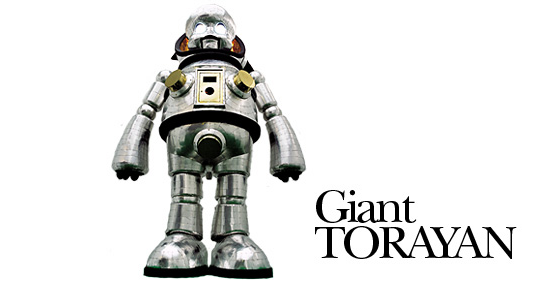
One of the most amazing of Yanobe’s creations was the seven-meter tall Giant Torayan, a childlike robot that can turn its head from side to side, shake its arms, and breath fire. It remind me the KARAKURI theatre and his track i saw to aichi prefecture, as one of the traditional Theatre and popular road festival.
 Inside the chest of Giant Torayan is a smaller Torayan pilot who sometime emerges from the chest cavity and then moves back inside.  This doubling of pilot and robot, seen in such famous MECHA anime such as Grandizer, Gig, Gundam and Neon Genesis Evangelion.

This GIANT TORAYAN doll is the ultimate child’s weapon, as it sings, dances, breathes fire, and follows only those orders given by children.


A masterpiece from Yanobe is Survival Gacha-Pon, constructed in 1998. The sculpture well displays Yanobe's vision of a world adapting to post-holocaust conditions.
 A Gacha-Pon is a Japanese vending machine. This particular vending machine, also fully functional, is filled with the necessities of the artist's unknow future.
 Inside the menacing, red machine are 100 plastic capsules. These are same kind of capsules you would find in any vending machine anywhere in the world. However, the differences found in Survival Gacha-Pon are the contents of these capsules.

The various items included are small packets of uncooked rice, assorted Japanese snacks, bandages, gauze, matches, steel wool for scrubbing after radiation exposure, and many of other survival goods.
In this useful artwork, makes us reflect well, are all the items necessary for daily convenience in a world plagued by the devastation of nuclear war (or today's nuclear reactors for energy of an uncorrect style of life).


SUGGESTIONS: art to be produced, for Fukushima's prefecture supporting (and pollution detector)

Atom Car, created by Yanobe in 1998 as part of a set, is a sleek, coin-operated atomic car (looks like an european car design of '60). Like most of his works, this car is fully functional. The coin slot accepts three 100 Yen coins and the vehicle is working and operational. The car shown here  is the white version. Black and yellow versions of the car also exist. The small, one-seat vehicle is fitted with functioning Geiger counters to detect radiation. Useful isn't it??
If the car detects radiation ten times, it shuts down!!

I am also suggest to produce it for pollution version, may t be in my town (Milan, italy is a very pollution city) any car of this model would NOT be able to working.


CG


IMAGES: 


martedì 15 novembre 2011

浮世絵 Ukiyo-e, l’estetica del mondo fluttuante, as a contemporary value

浮世絵
L’estetica “ del mondo fluttuante” viene introdotta durante il periodo EDO (1600-1868), dominato dallo shogunato dei TOKUGAWA.
Questa tecnica artistica divenne molto popolare a Edo durante la seconda metà del XVII secolo
 a partire dalle opere monocromatiche di Hishikawa Moronobu (ca. 1670).
 All'inizio, si utilizzava soltanto inchiostro cinese,
 in seguito alcune stampe vennero colorate a mano con dei pennelli, ma nel XVIII secolo Suzuki Harunobu sviluppò la tecnica della stampa policromatica per produrre nishiki-e.


UNA CULTURA DI MASSA: albori di un arte POP (e non della pop art)


Gli Ukiyo-e non erano costosi perché erano prodotti in massa ed erano pensati principalmente per gli abitanti della città che non potevano permettersi dei veri dipinti. Alle origini, il soggetto principale degli Ukiyo-e era la vita della città, in particolare le attività e le scene dei quartieri dei divertimenti:
belle cortigiane, grossi lottatori di sumo e attori famosi erano ritratti mentre svolgevano il loro lavoro. In seguito divennero popolari anche i paesaggi, mentre non apparvero quasi mai soggetti politici e di altre classi sociali all'infuori di quelle più basse (composte appunto da cortigiane, lottatori di sumo e attori).

Il sesso non era un vero e proprio tema a sé, anche se comparve spesso in queste stampe.
Gli artisti e gli editori erano talvolta sottoposti a sanzioni per queste stampe sessualmente esplicite, dette shunga.


La bellezza femminile UKIYO-E, nel passato e oggi: ritratti BIJINGA (bijinga portraicts and the feminine beautyness, in the past and now)

美人畫
(Bijinga lit., "beautiful person picture") is a generic term for pictures of beautiful women in Japanese art, especially in woodblock printing of the ukiyo-e genre, which predate photography.

 The term can also be used for modern media, provided the image conforms to a somewhat classic representation of a woman, usually depicted wearing kimono.

Nearly all ukiyo-e artists produced bijinga, it being one of the central themes of the genre. However, a few, including Utamaro, Suzuki Harunobu, Ito Shinsui, Toyohara Chikanobu and Torii Kiyonaga, are widely regarded as the greatest innovators and masters of the form.


北斎漫画


"Hokusai's Sketches is a collection of scketches of various subjects by the Japanese artist Hokusai.


Subjects of the sketches include landscapes, flora and fauna, everyday life and the supernatural. The word manga in the title does not refer to the contemporary story-telling manga, as the sketches in the work are not connected to each other. Block-printed in three colours (black, gray and pale flesh), the Manga comprise literally thousands of images in 15 volumes, the first published in 1814, when the artist was 55.


Chris Gangitano